
Turning OpenMetadata into a User-Friendly Data Portal with PortalJS

João Demenech

OpenMetadata is a strong foundation for modern data governance. It excels at managing metadata, lineage, ownership, and data quality, and it is clearly designed for data engineers, platform teams, and governance practitioners.
Its user interface reflects that focus. Concepts such as database services, schemas, and assets are exposed directly, assuming users understand how data infrastructure works. This is effective for power users, but it creates friction when OpenMetadata is used by a broader audience.
Many organizations want researchers, analysts, partners, or other non-technical users to explore their data. For them, how data is stored matters far less than what the data represents and how it can be used.
Making OpenMetadata easier to explore with PortalJS
PortalJS helps solve this by turning OpenMetadata into a data portal that is easier to browse and understand. It keeps all the existing metadata, but presents it in a simpler way, so people can focus on datasets and their contents instead of technical details.
A ready-to-use, open-source template powered by Next.js and Tailwind CSS is available to get started quickly:
👉 https://github.com/datopian/portaljs-frontend-starter-omd
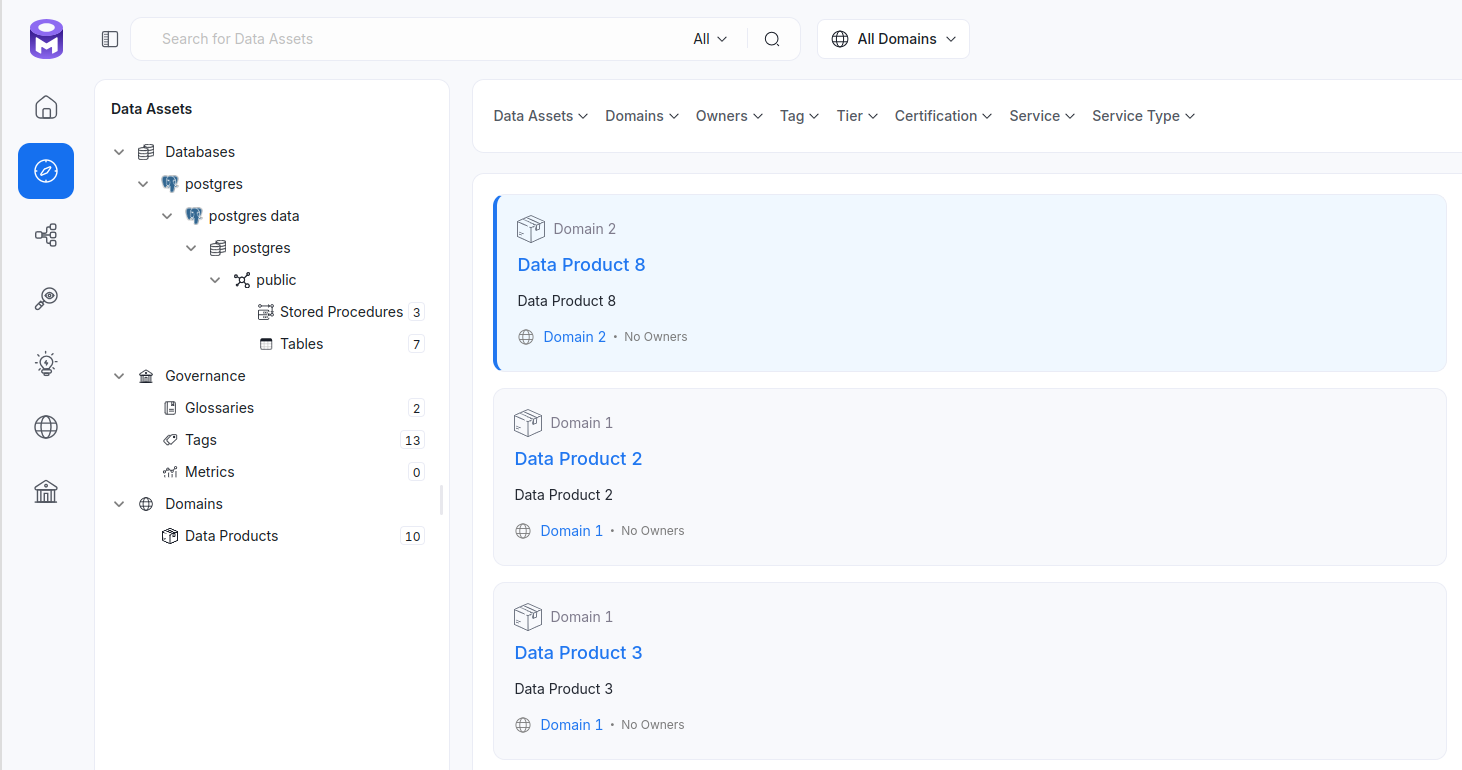
OpenMetadata explore page, where users navigate metadata through infrastructure concepts
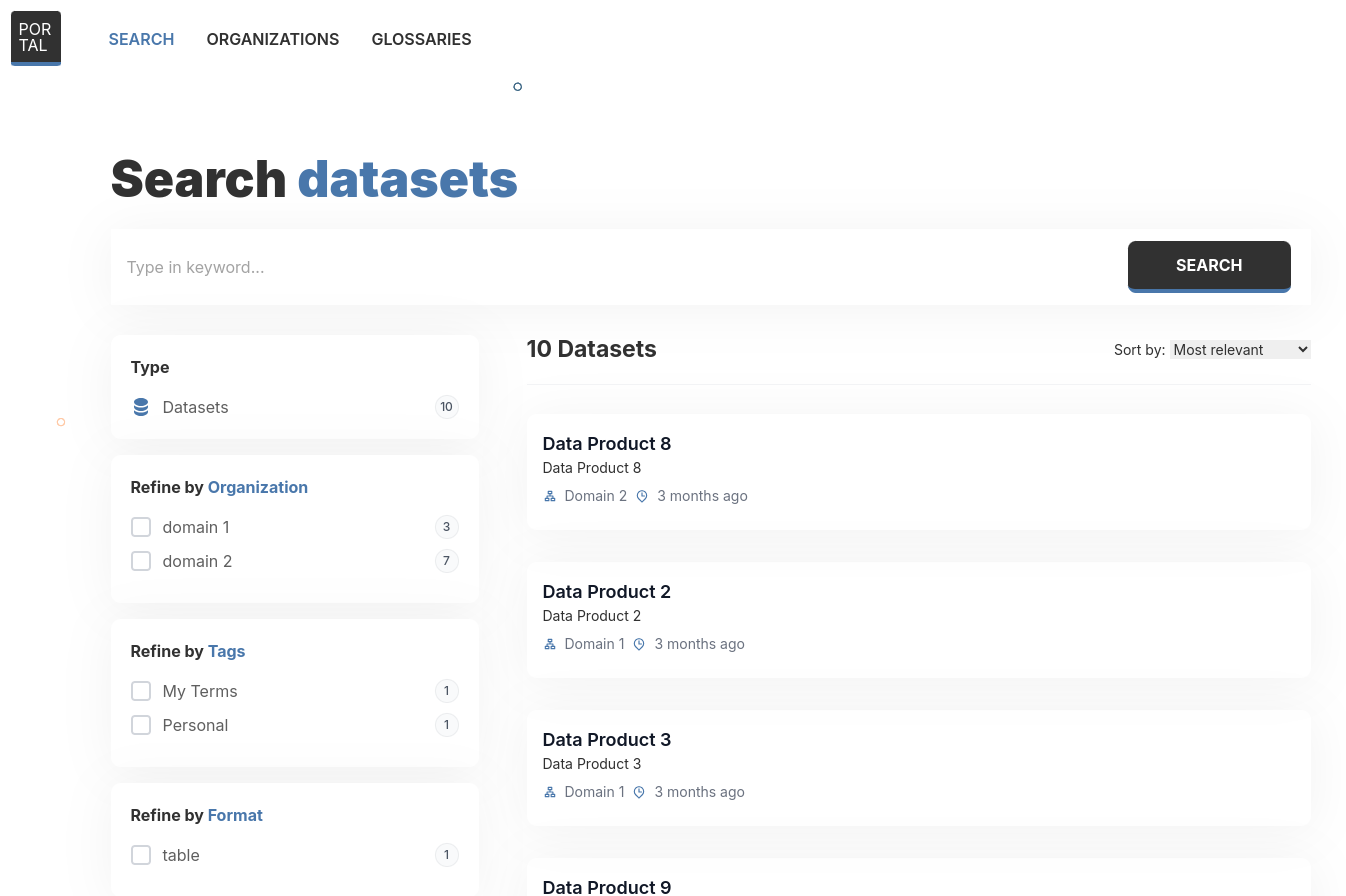
PortalJS dataset search page, focused on helping users quickly find datasets
Why discovery is hard for non-technical users
In OpenMetadata, navigation mirrors how data is stored:
- database services
- databases
- schemas
- tables and assets
This structure makes sense from an engineering point of view, but it forces users to understand internal architecture before they can answer a simpler question: what data exists that is relevant to me?
Most data consumers think in terms of datasets, domains, topics, and documentation. When finding data requires understanding storage layers, many users struggle to get value from the catalog.
This is not a limitation of OpenMetadata’s metadata model. It is a mismatch between a governance-focused interface and a discovery-focused use case.
Access and sharing add another layer of friction
OpenMetadata is designed as an authenticated system. Requiring users to sign in is often the right choice for governance workflows, but it limits how metadata can be shared.
This makes it harder to:
- Share data with external collaborators
- Build lightweight data portals
- Expose selected metadata to broader audiences
OpenMetadata is not intended to be a flexible, audience-facing data portal, which is why many teams look for an additional interface focused on exploration and reading.
PortalJS as a data portal for OpenMetadata
PortalJS provides that interface.
It is an open-source framework for building data portals on top of systems like OpenMetadata. OpenMetadata continues to manage metadata, ownership, and lineage, while PortalJS focuses on helping people find and understand data more easily.
This separation allows teams to keep the full power of OpenMetadata, while offering a much simpler experience to data consumers.
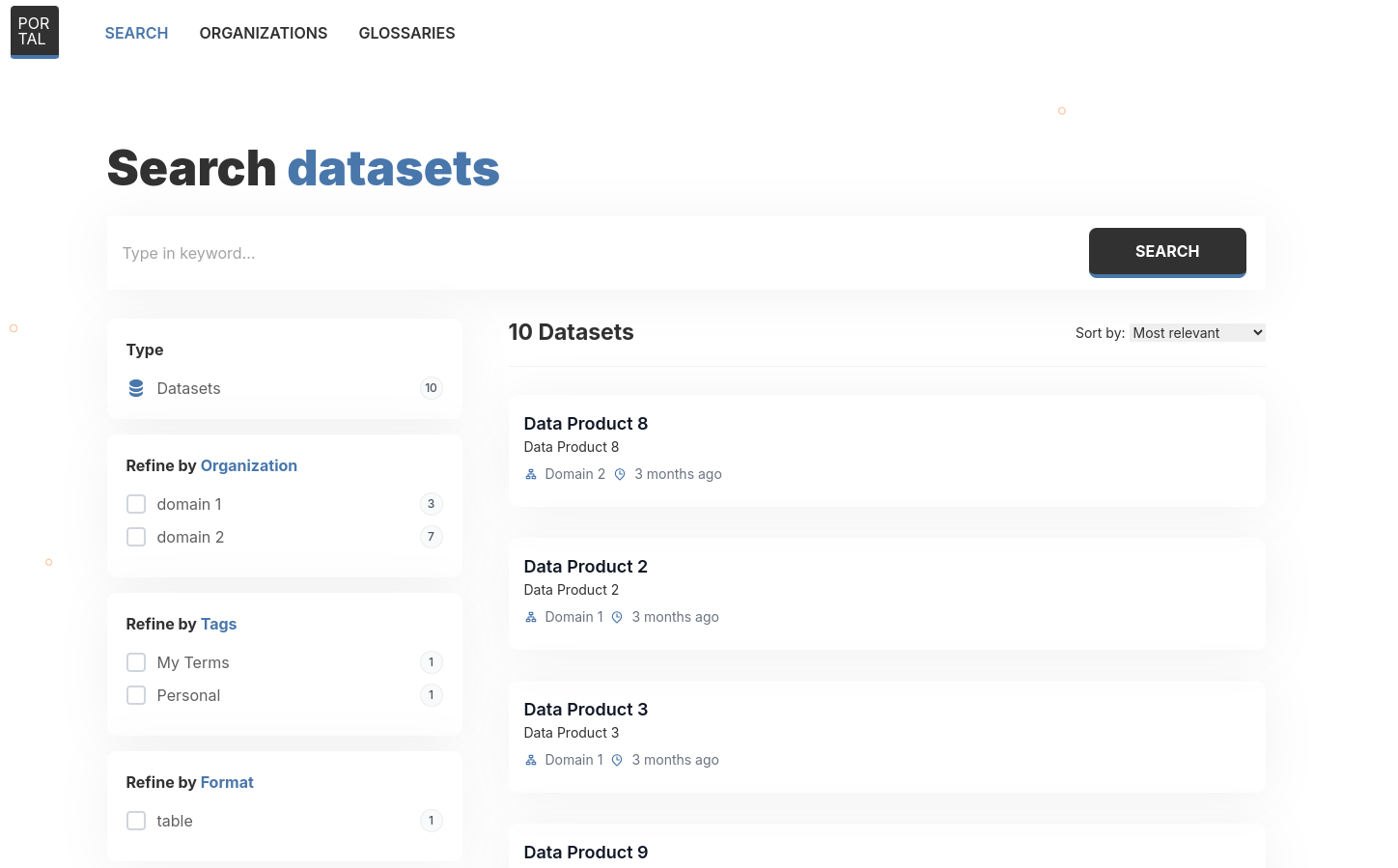
A simpler mental model for data discovery
The PortalJS OpenMetadata template reshapes how metadata is presented, using concepts that are easier for most users to understand:
- Data Product → Dataset
- Domain → Organization
- Asset → Resource
Nothing is removed or simplified in the metadata itself. The difference is how that information is organized and displayed, making it easier to browse, search, and explore.
What the template provides out of the box
The open-source PortalJS OpenMetadata template includes:
- A dataset search page
- Domain (organization) browsing
- A glossary page
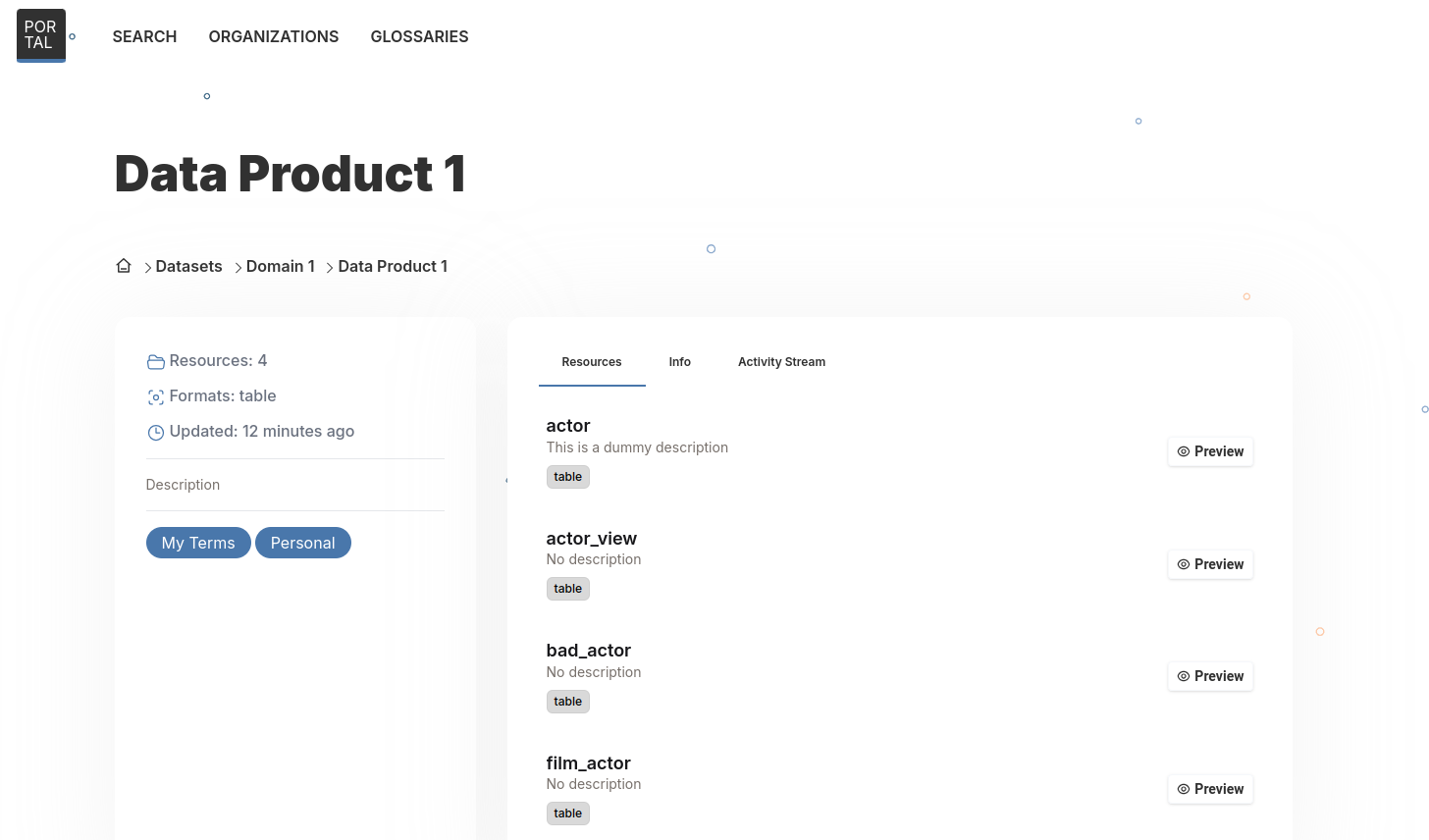
- A dataset details page where users can understand the dataset metadata and browse available resources
- Resource detail pages
All pages are designed for read-only, exploration-first use. Metadata is fetched directly from OpenMetadata, with no duplication or manual syncing.
Open source, flexible by design
The template is built with Next.js and Tailwind CSS, making it easy to customize, extend, and brand.
Because it is fully open source, teams retain control over:
- The codebase
- How and where it is deployed
- Who can access which data
PortalJS can be adapted to different audiences and access requirements.
Not just for open data
While PortalJS can power open data portals, the template is not limited to public use cases.
It can be customized to:
- Add authentication
- Restrict access to specific datasets or domains
- Expose data conditionally based on users, roles, or custom properties
This makes it suitable for internal catalogs, research portals, partner-facing experiences, and fully public portals alike.
From governance to exploration
OpenMetadata is built for managing metadata. PortalJS is built for helping people explore and understand data.
Together, they allow organizations to turn existing metadata into a user-friendly data portal that serves more people, without replacing governance tooling.
We’ve used this approach and the PortalJS OpenMetadata template with many different clients, across a range of data platforms and use cases. In practice, it has proven to be a flexible and reliable way to make OpenMetadata easier to explore, without changing how metadata is managed underneath.
For a concrete example of how this approach has worked in practice, check out our case study:
👉 Helping Researchers Find The Right Data Faster — With A Simple Frontend For OpenMetadata.
If you are already using OpenMetadata and want to improve data discovery, the open-source PortalJS OpenMetadata template is a practical place to start.